Dr. Carlos J
Camacho
Every protein has a story — written in its structure, told through its interactions. Our lab works to decode that language: modeling the physical forces that drive molecular recognition, and building predictive tools that connect genomic sequence to protein function. We operate at the intersection of computational modeling and comparative genomics, where structure meets evolution. This science translates — into patents, into targets, into therapies. Our discoveries span a broad range of human disease, from cancer to neurodegeneration, from pain to neuroprotection.

5/5
Dr. Carlos J Camacho
Speciality
H-index 51
Peer-reviewed papers 100+
Total citations 12,000+
Years of research 20+
Our
Applications
We develop fast algorithms and public web servers to predict protein structures and their substrates. Our primary computational modeling tools are available to the broader scientific community.
- ClusPro (PPI Prediction)
- ZINCPharmer
- PocketQuery & AnchorQuery
- FastContact
- SIMPLE
- PepDock-PDZ
Patents
Inventor: Carlos J Camacho
Neuroprotective Disruption of Kv2.1/Syntaxin Interaction by Small Molecules
Small molecule compounds capable of disrupting Kv2.1-syntaxin binding, useful for treating a variety of neurological disorders, diseases, and injuries.
Inventor: Carlos J Camacho
Targeting CYB5R3
Small molecule compounds capable of disrupting Kv2.1-syntaxin binding, useful for treating a variety of neurological disorders, diseases, and injuries.
Inventor: Carlos J Camacho
Small Molecules That Specifically Inhibit TNF-Induced NF-κB Inflammation
Small molecules that specifically inhibit the TNF-induced NF-κB inflammation pathway, with associated screening and therapeutic methods.
Inventor: Carlos J Camacho
Selective Peptidomimetic Modulators of CaV2.2 (N-Type) Voltage-Gated Calcium Channels
Novel peptidomimetic compounds (Formula I–III) targeting CaV2.2 N-type voltage-gated calcium channels for pain management.
Inventor: Carlos J Camacho
FOXM1 Inhibitors and Their Use in Treating Cancers
Adjuvant therapy for cancers where FOXM1 is overexpressed, including AML and solid tumors, using FOXM1 inhibitory compounds.
Inventor: Carlos J Camacho
GAL3BP Polypeptide Compositions and Methods for Treatment of Cancer
Compositions and methods for treating cancers, detecting responsiveness to immunotherapy, and reversing resistance to immunotherapy
Research Areas
Advancing the science of protein interactions, drug discovery, and computational biology through peer-reviewed research with over 12,000 citations.
4.9/5
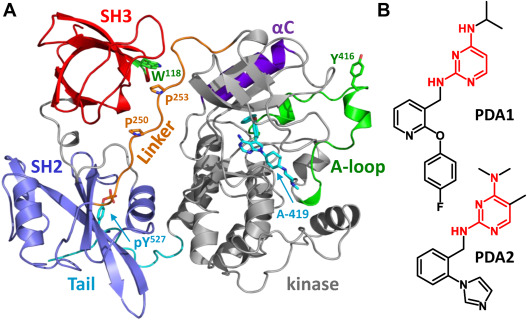
An SH3-binding allosteric modulator stabilizes the global conformation of the AML-associated Src-family kinase, Hck
Two pyrimidine diamines (PDA1 & PDA2) were evaluated for allosteric effects on the Src-family kinase Hck, a target in acute myeloid leukemia. PDA1 stabilizes the global kinase conformation by bridging the N-lobe and SH3 domain, opening a new avenue for allosteric inhibitors that can overcome ATP-site resistance mutations.
2024
5/5
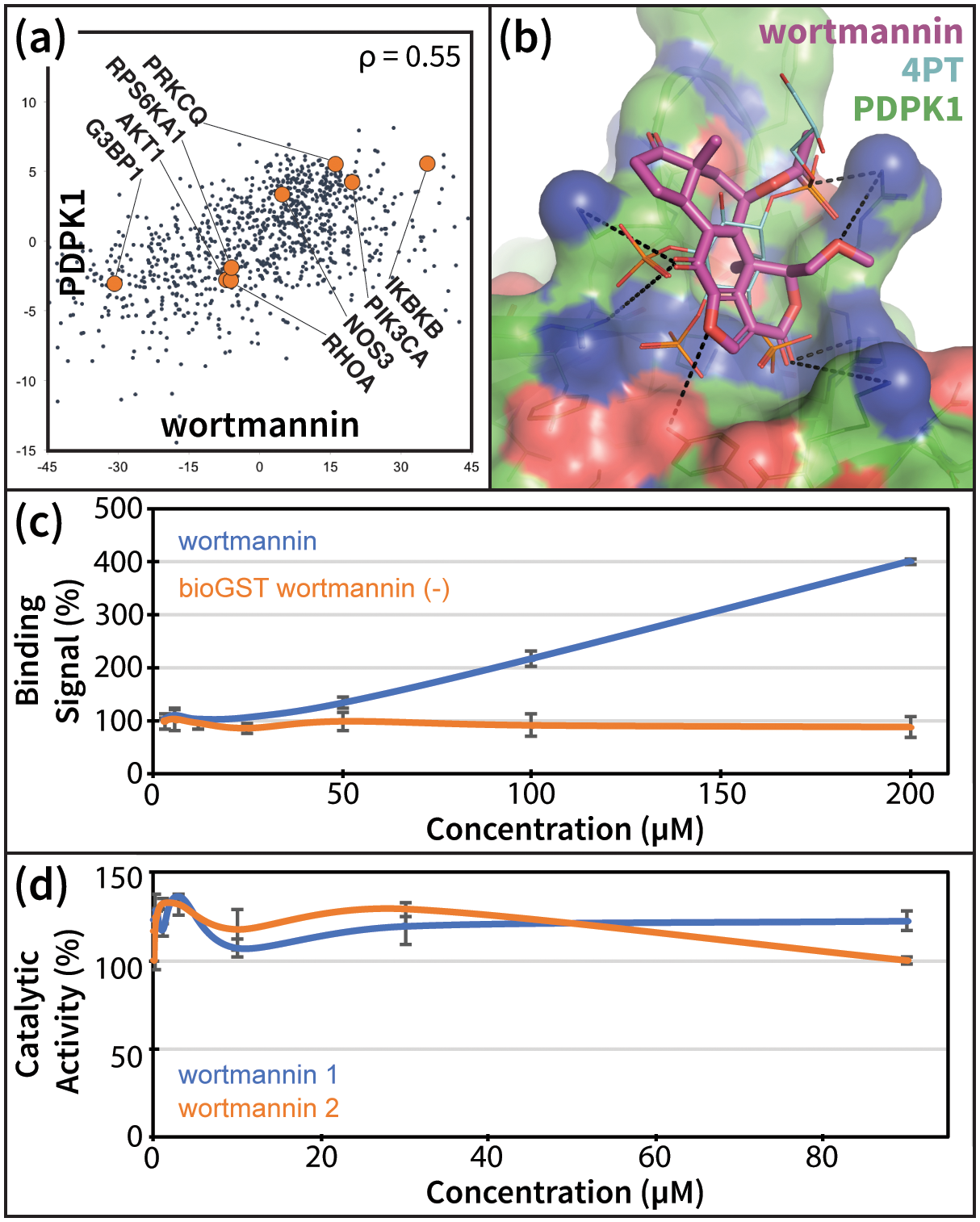
Predicting protein targets for drug-like compounds using transcriptomics
A machine learning pipeline correlates mRNA expression signatures from drug treatments (LINCS L1000) with gene knockdowns to predict protein targets. Validated on 29 FDA-approved drugs, the method identifies targets even for compounds with no structural similarity to known drugs.
2018
4.5/5
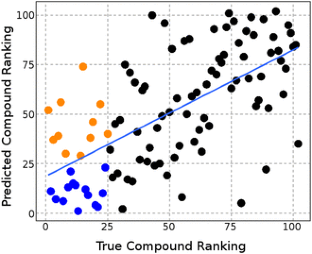
Optimal affinity ranking for automated virtual screening validated in prospective D3R grand challenges
Prospective evaluation in blind D3R Grand Challenges shows that docking to the holo-receptor with the most chemically similar ligand achieves the best affinity correlations (Spearman ρ ~0.5). Provides clear, evidence-based guidelines for automated virtual screening pipelines.
2018
4.9/5
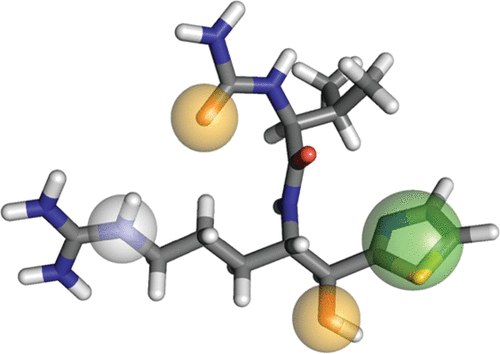
Pharmer: Efficient and exact pharmacophore search
Introduces KDB-trees and Bloom fingerprints enabling exact pharmacophore searches of ~2 million structures in under one minute — over 10× faster than prior technologies. Open-source software now widely used in computational drug discovery pipelines around the world.
2011
5/5
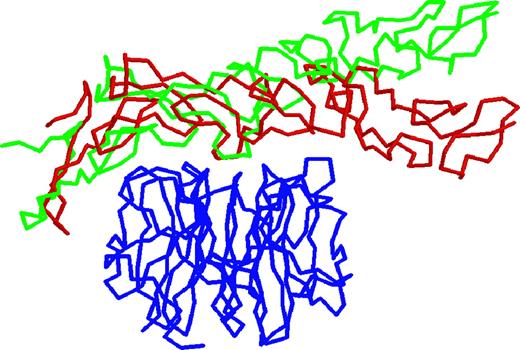
ClusPro: A fully automated algorithm for protein–protein docking
The first fully automated web server for protein–protein docking. Evaluates billions of conformations using desolvation and electrostatic filters, then clusters candidates to find near-native complexes. In CAPRI blind challenges, it often matched or outperformed human experts. Licensed to Schrödinger.
2004
4.5/5
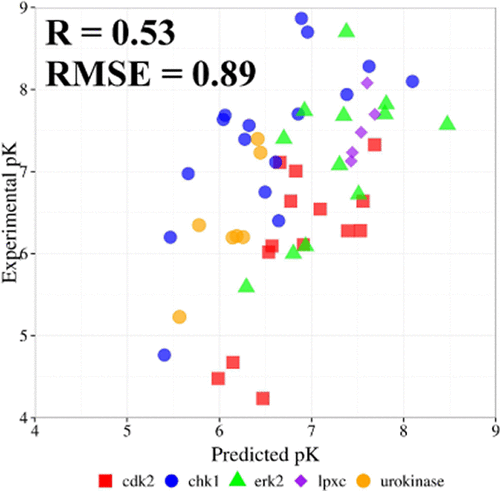
Lessons learned in empirical scoring with smina from the CSAR 2011 benchmarking exercise
This highly cited paper introduces smina, a widely used, open-source tool for molecular docking and scoring. It is fundamentally important in the field of computational drug design for accurately predicting how small molecule drugs bind to their protein targets.
2013
4.9/5
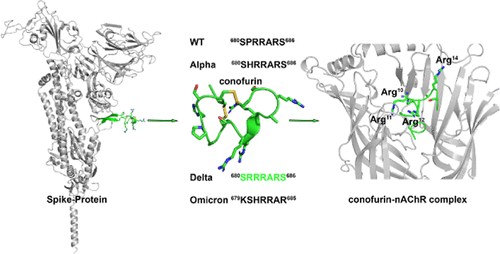
Design, synthesis, and structure–Activity relationships of novel peptide derivatives of the severe acute respiratory syndrome-Coronavirus-2 spike-Protein that potently inhibit …
This study reveals that specific sequences in the SARS-CoV-2 spike protein structurally mimic neurotoxins and interact strongly with nicotinic acetylcholine receptors. This critical finding sheds light on the neurological symptoms of COVID-19 and informs the development of novel peptide-based therapeutics.
2024
5/5
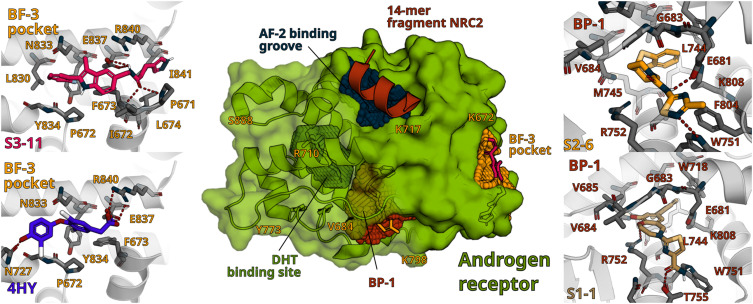
Characterization of Allosteric Modulators that Disrupt Androgen Receptor Co-activator Protein-Protein Interactions to Alter Transactivation
This crucial pharmacological study characterizes novel chemical compounds that disrupt specific protein-protein interactions surrounding the androgen receptor. It identifies promising new drug leads for treating metastatic castration-resistant prostate cancer, a highly aggressive disease.
2023
4.5/5
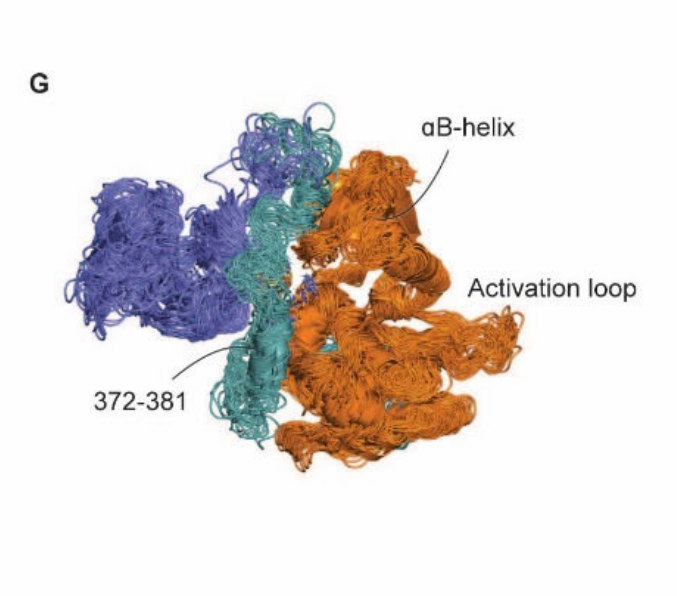
Modulation of the substrate specificity of the kinase PDK1 by distinct conformations of the full-length protein
This research investigates the structural flexibility of PDK1, a master kinase that regulates cell growth. It demonstrates how shifts in the protein's overall 3D shape dictate which specific substrates it can bind to, offering a new perspective on targeting kinase networks in disease.
2023
OurApproach
Thermodynamic Analysis
Applying first principles thermodynamic analysis to explain the nature and relationship of protein interactions and function.
Algorithm Development
Developing fast algorithms for filtering docked conformations and ranking them based on their clustering properties.
Modeling & Simulations
Using computational modeling and comparative genomics to model the physical interactions responsible for molecular recognition.
Drug Development
Rapidly searching MCR chemical space for novel protein-protein inhibitors and performing interactive pharmacophore searches.
Publications
Advancing the science of protein interactions through peer-reviewed research.
Drug Discovery
We are developing tools that rapidly search MCR chemical space for novel protein-protein inhibitors. We automatically identify anchors, amino acids critical to binding, and perform interactive pharmacophore searches of anchor-oriented compounds.
Disordered Proteins
Intrinsic protein disorder has been found in many proteins. Our genome-wide survey indicates that the distribution of disorder depends strongly on protein function, and a first principles thermodynamic analysis explains the nature of this relationship.
Protein-Protein Interactions (PPIs)
We have developed a fast algorithm for filtering docked conformations with good surface complementarity, and ranking them based on their clustering properties. The free energy filters select complexes with lowest desolvation and electrostatic energies.
Protein-DNA Interactions
We developed a novel experimentally based approach to accurately and quantitatively estimate inter-molecular contact free energies and atomic desolvations in protein and DNA interactions. The method provides a general framework to design and optimize EGR-like transcription factors in silico.